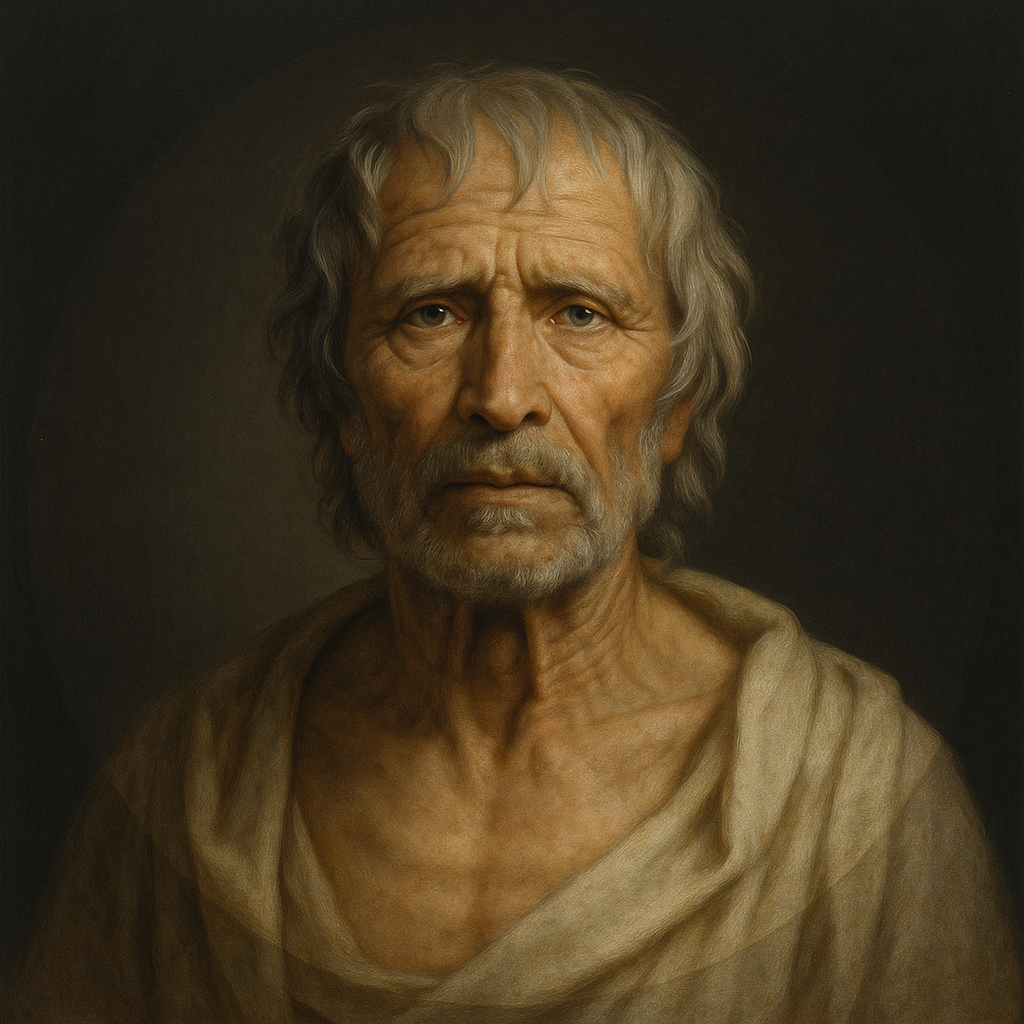
At a glance
- Age
- 56
- Born
- February 12, 1809
- From
- Hardin County, Kentucky, United States
- Lives in
- Springfield
- Nationality
- United States
Biography
The lines people quote most from him are short ones. A house divided against itself cannot stand. With malice toward none, with charity for all. At Gettysburg he compressed the purpose of a war into a few sentences and used them to rededicate the government to equality. That gift for saying the necessary thing briefly is a large part of why his words still circulate, and it was earned rather than inherited — he came out of frontier poverty in Hardin County, Kentucky, taught himself, worked as a postmaster, went into law, and from there into politics.
He built his national position on opposition to the spread of slavery, and he arrived in office as the country was breaking apart. Secession and war followed almost immediately. He learned military strategy on the job while trying to keep public will behind the effort, replaced generals when they failed him, and held together a cabinet of former opponents rather than surrounding himself with agreement. He used humour to take the pressure out of a room, and read reports deep into the night. His letters show both patience and hardness, depending on what the moment asked.
The Emancipation Proclamation changed what the war was for and enlarged what the Union meant; he also opened military service to Black soldiers. Re-election in 1864, in the middle of the fighting, showed that democratic choice could survive the conflict. He was thinking about reconstruction, and about doing it without vengeance, when he was assassinated in April 1865.
What followed his death was constitutional amendment and a long argument that has not stopped. Historians still contest his policies and turn over the what-ifs, while granting him the character. Writers and filmmakers keep going back to his voice. The monuments built to him serve as places of pilgrimage and, just as often, protest. If there is a working lesson in the life, it is leadership as listening attached to decision — and the unfinished work he named, still outstanding.
He built his national position on opposition to the spread of slavery, and he arrived in office as the country was breaking apart. Secession and war followed almost immediately. He learned military strategy on the job while trying to keep public will behind the effort, replaced generals when they failed him, and held together a cabinet of former opponents rather than surrounding himself with agreement. He used humour to take the pressure out of a room, and read reports deep into the night. His letters show both patience and hardness, depending on what the moment asked.
The Emancipation Proclamation changed what the war was for and enlarged what the Union meant; he also opened military service to Black soldiers. Re-election in 1864, in the middle of the fighting, showed that democratic choice could survive the conflict. He was thinking about reconstruction, and about doing it without vengeance, when he was assassinated in April 1865.
What followed his death was constitutional amendment and a long argument that has not stopped. Historians still contest his policies and turn over the what-ifs, while granting him the character. Writers and filmmakers keep going back to his voice. The monuments built to him serve as places of pilgrimage and, just as often, protest. If there is a working lesson in the life, it is leadership as listening attached to decision — and the unfinished work he named, still outstanding.
Known For
Preserving the Union; Emancipation Proclamation; Gettysburg Address.
Quotes 8
“Discipline is choosing between what you want now and what you want most.”
“Most folks are as happy as they make up their minds to be.”
“Commitment is what transforms a promise into reality.”
“Give me six hours to chop down a tree and I will spend the first four sharpening the axe.”
“I am a slow walker, but I never walk back.”
“Whatever you are, be a good one.”
“The best way to predict your future is to create it.”
“Government of the people, by the people, for the people, shall not perish from the Earth.”