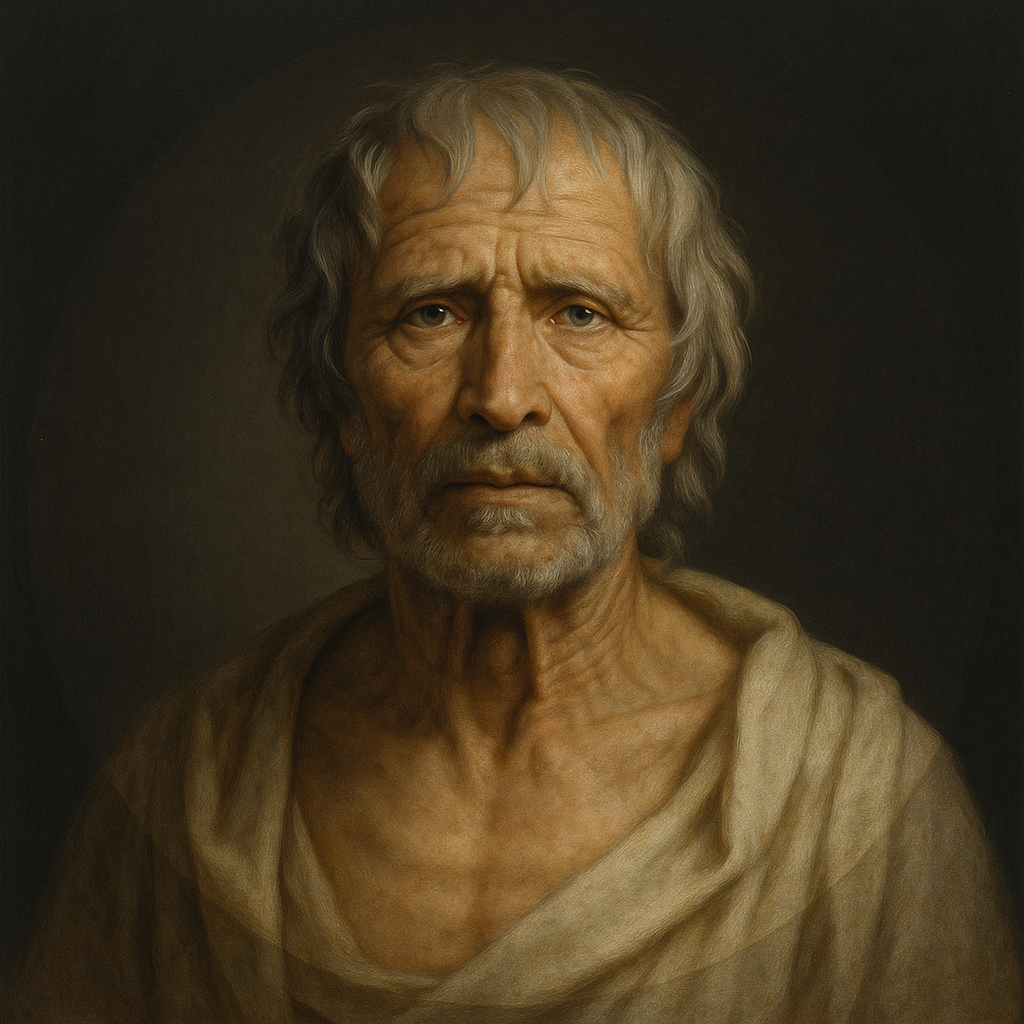
At a glance
- From
- Pella, Macedon
- Nationality
- Macedonia
Biography
The quotes that circulate about him usually come back to tempo — the idea that speed and nerve can beat numbers. That reputation rests on real battles. At Issus and Gaugamela he took on Persia with combined arms and fast, risky manoeuvres, and won. Sieges were a different test, one of engineering and stubbornness rather than movement. Strategists still pick apart how he handled pace and deception.
Before any of that he was a student of Aristotle, in Macedon, and he came into command already holding a disciplined army and an intention to use it. What followed stretched logistics across deserts and mountains and forced constant improvisation. He promoted on merit among his officers while keeping rivalries in check, and he pushed his soldiers far enough that loyalty came under real strain. He took on elements of local dress and ceremony to hold conquered ground, and his attempt to build a mixed court that functioned as one thing was contested in his own lifetime.
The cities he founded — Alexandria among them — became hubs of trade and culture, and the urban network that grew from them carried Greek language and learning outward, art and religion moving along the same routes. That transmission fed later science and philosophy.
He died in Babylon with further campaigns unbegun, and his generals divided the territory into empires of their own. Myths accumulated around both his feats and his character, and the argument over vision against violence has never closed. The title Great ended up describing something broader than the map: ambition and cultural mixing compressed into a single name.
Before any of that he was a student of Aristotle, in Macedon, and he came into command already holding a disciplined army and an intention to use it. What followed stretched logistics across deserts and mountains and forced constant improvisation. He promoted on merit among his officers while keeping rivalries in check, and he pushed his soldiers far enough that loyalty came under real strain. He took on elements of local dress and ceremony to hold conquered ground, and his attempt to build a mixed court that functioned as one thing was contested in his own lifetime.
The cities he founded — Alexandria among them — became hubs of trade and culture, and the urban network that grew from them carried Greek language and learning outward, art and religion moving along the same routes. That transmission fed later science and philosophy.
He died in Babylon with further campaigns unbegun, and his generals divided the territory into empires of their own. Myths accumulated around both his feats and his character, and the argument over vision against violence has never closed. The title Great ended up describing something broader than the map: ambition and cultural mixing compressed into a single name.
Known For
Conquest of Persian Empire; founding Alexandria; Hellenistic era.