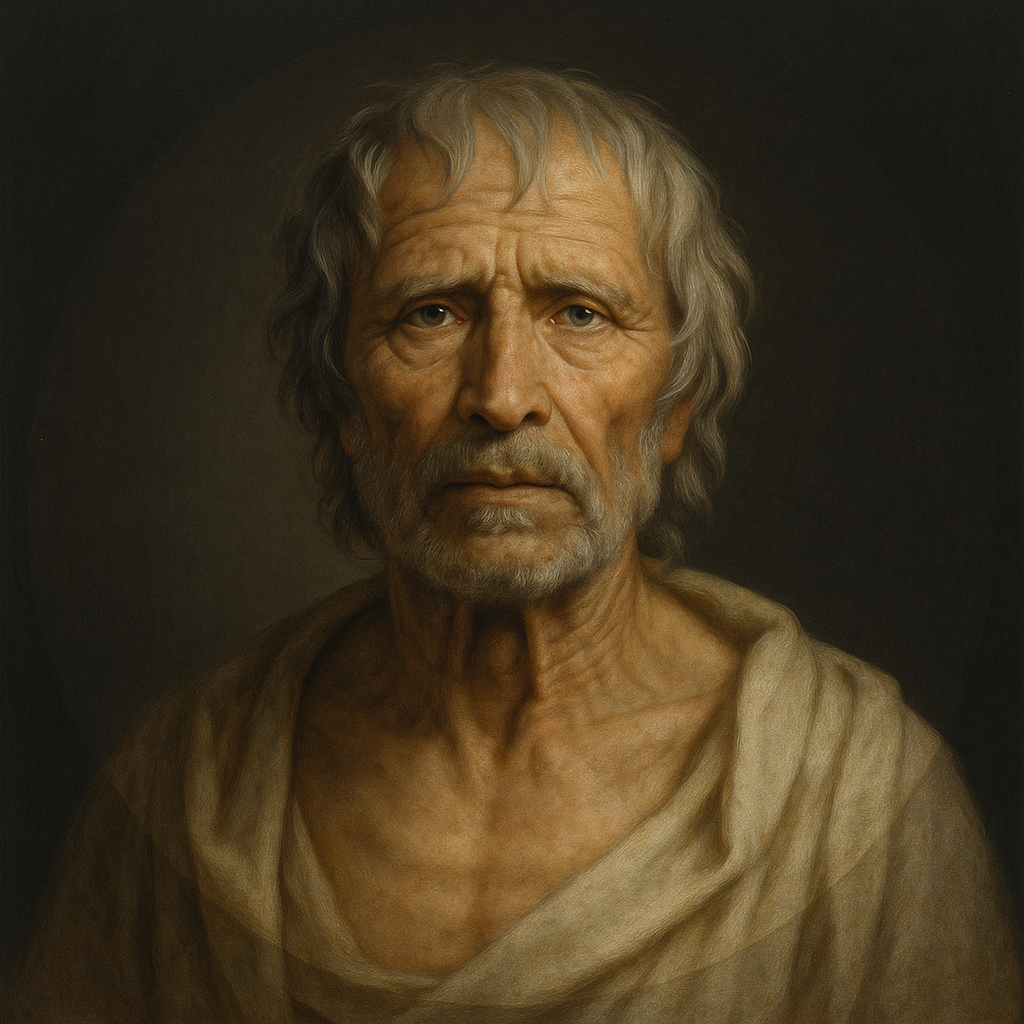
At a glance
- Age
- 56
- Born
- December 17, 1770
- From
- Bonn, Electorate of Cologne (Germany)
- Lives in
- Beethoven House
- Nationality
- Electorate of Cologne
Biography
The clip that brings most people here is usually the same one: a composer who began losing his hearing in his twenties, kept losing it, and went on writing anyway. The document behind that story is the Heiligenstadt Testament, in which despair gives way to resolve. What followed was the run of middle-period works — the Eroica, the Fifth Symphony — built on struggle resolving into triumph, and the opera Fidelio, with its picture of love and liberty. His deafness has since been read less as a limitation than as a form of ferocious concentration.
He was born in Bonn in 1770 and trained there and in Vienna, taking in Haydn and Mozart before arriving at something of his own. He made the symphony bigger and the piano sonata more dramatic. His habit of insistent rhythm and tight motivic working gives the music an argumentative grip: form is something being reasoned through rather than filled in. Early success brought patrons and a degree of independence rare for composers of his day, and he cultivated the idea of the artist as his own master.
The late work went further into harmonic and structural experiment — the Missa solemnis, the late quartets — and the Ninth Symphony closed with a choral finale imagining people bound together by joy. His sketchbooks make clear how much patient revision sat behind what sounds like sudden inspiration. Performers still find the demands hard to meet.
He died in 1827. The music altered what concert audiences expected of listening; composers study his handling of theme and form as a kind of grammar, scholars argue over tempo and period instruments, and the pieces turn up at state ceremonies and at protests alike. His pianos and manuscripts sit in museums. The music is still used to test what hope can sound like.
He was born in Bonn in 1770 and trained there and in Vienna, taking in Haydn and Mozart before arriving at something of his own. He made the symphony bigger and the piano sonata more dramatic. His habit of insistent rhythm and tight motivic working gives the music an argumentative grip: form is something being reasoned through rather than filled in. Early success brought patrons and a degree of independence rare for composers of his day, and he cultivated the idea of the artist as his own master.
The late work went further into harmonic and structural experiment — the Missa solemnis, the late quartets — and the Ninth Symphony closed with a choral finale imagining people bound together by joy. His sketchbooks make clear how much patient revision sat behind what sounds like sudden inspiration. Performers still find the demands hard to meet.
He died in 1827. The music altered what concert audiences expected of listening; composers study his handling of theme and form as a kind of grammar, scholars argue over tempo and period instruments, and the pieces turn up at state ceremonies and at protests alike. His pianos and manuscripts sit in museums. The music is still used to test what hope can sound like.
Known For
Symphonies (especially 3, 5, 9); piano sonatas; string quartets.