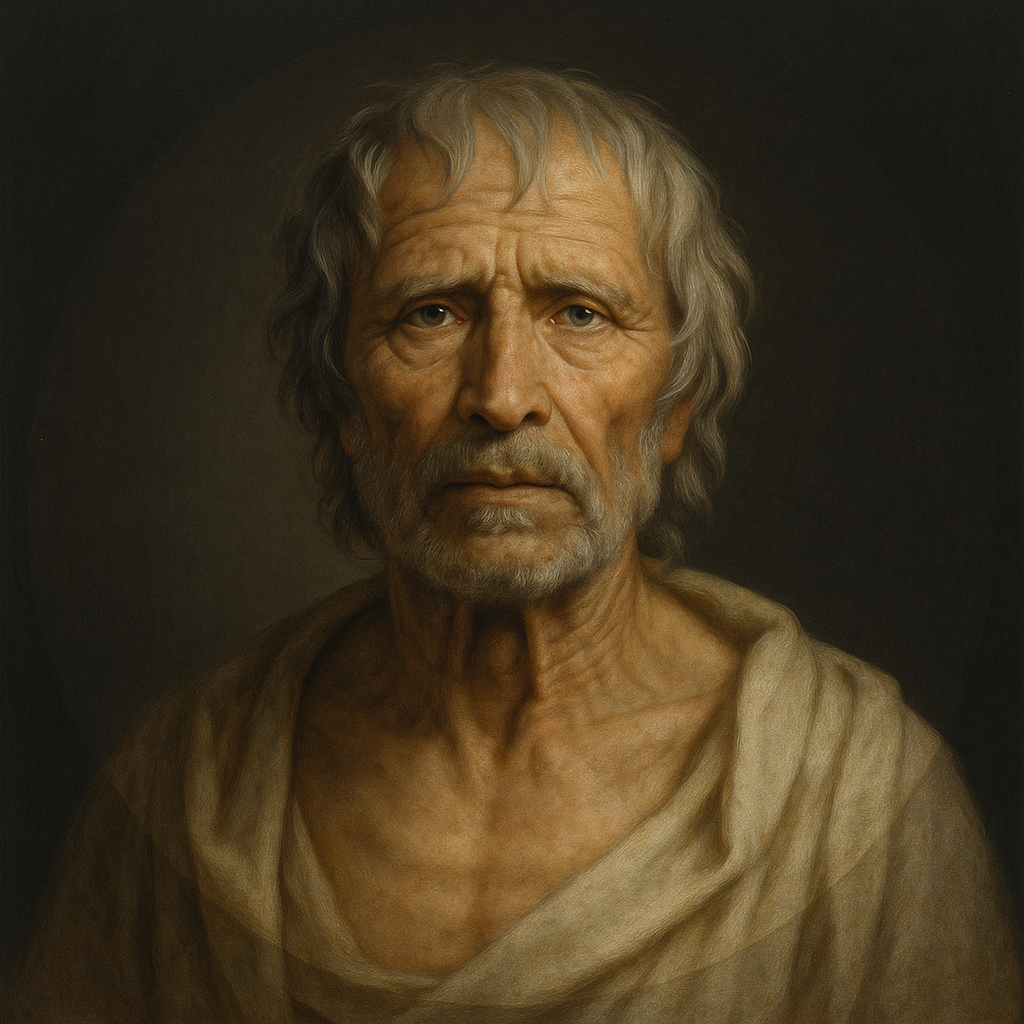
At a glance
- Age
- 37
- Born
- March 30, 1853
- From
- Zundert, Netherlands
- Lives in
- Monastery of Saint-Paul-de-Mausole
- Nationality
- Kingdom of the Netherlands
Biography
The swirling sky of Starry Night, the sunflowers, the plain bedroom in Arles — these are the images most people meet first, often long before they know anything about the man who made them. He is the painter who worked through periods of mental illness without stopping, and that combination of vivid colour and evident struggle is why his name keeps surfacing in conversations about persistence.
He came late to painting. Born in Zundert in 1853, he moved between trades and towns before settling on art and then pursuing it with unusual intensity. He taught himself through study of drawing and colour theory, and kept up a correspondence with his brother Theo throughout. In Paris he came across the Impressionists and Japanese prints, which changed his palette and the way he arranged a picture. In Arles he chased light directly, building canvases from vibrating strokes and complementary contrasts, and treating portraits, fields and interiors alike as places where feeling could be staged. The working days were long and consuming.
Illness interrupted the work but did not end it. At Saint-Rémy he kept to a disciplined routine, turning inner turbulence into ordered images — cypresses that twist like flame, stars moving in living skies. Ordinary objects were given the same seriousness as grand subjects. His letters set out his experiments and his doubts plainly, without dressing them up, and he spoke of wanting his paintings to carry care forward to people he would never meet.
He died in 1890. Exhibitions afterwards revealed the scale of what he had made, and other artists took lessons from his handling of colour and line. Museums and films built a public picture of hardship and generosity; scholars have argued over diagnosis while agreeing about the craft. His reproductions now hang in homes, classrooms and clinics, which is perhaps the clearest measure of what the work does for people who look at it.
He came late to painting. Born in Zundert in 1853, he moved between trades and towns before settling on art and then pursuing it with unusual intensity. He taught himself through study of drawing and colour theory, and kept up a correspondence with his brother Theo throughout. In Paris he came across the Impressionists and Japanese prints, which changed his palette and the way he arranged a picture. In Arles he chased light directly, building canvases from vibrating strokes and complementary contrasts, and treating portraits, fields and interiors alike as places where feeling could be staged. The working days were long and consuming.
Illness interrupted the work but did not end it. At Saint-Rémy he kept to a disciplined routine, turning inner turbulence into ordered images — cypresses that twist like flame, stars moving in living skies. Ordinary objects were given the same seriousness as grand subjects. His letters set out his experiments and his doubts plainly, without dressing them up, and he spoke of wanting his paintings to carry care forward to people he would never meet.
He died in 1890. Exhibitions afterwards revealed the scale of what he had made, and other artists took lessons from his handling of colour and line. Museums and films built a public picture of hardship and generosity; scholars have argued over diagnosis while agreeing about the craft. His reproductions now hang in homes, classrooms and clinics, which is perhaps the clearest measure of what the work does for people who look at it.
Known For
Starry Night; Sunflowers; Bedroom in Arles; expressive color and line.